
We Need to Talk About Abigail Adams with Laura Kamoie and Stephanie Dray
May 5, 2026
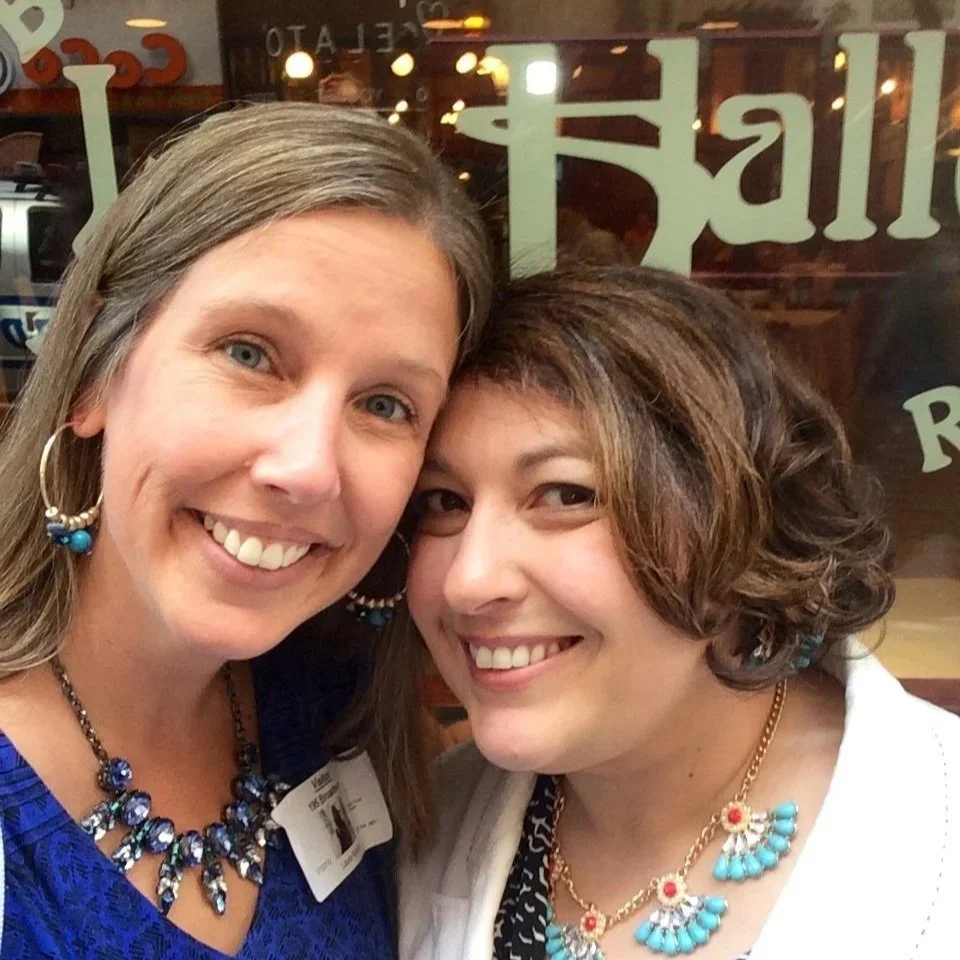
Featured Guests:
Laura Kamoie and Stephanie Dray
Laura Kamoie and Stephanie Dray are bestselling authors of historical fiction known for their deeply researched, emotionally rich novels centered on women’s lives during pivotal moments in history. Together, they’ve written America’s First Daughter, My Dear Hamilton, and A Founding Mother, bringing new perspective to the American Revolution through the voices of the women who lived it.Connect with E.B. Asher
What if the story we’ve been told about the American Revolution is only half the picture?
In this episode, we sit down with bestselling authors Laura Kamoie and Stephanie Dray—the powerhouse duo behind America’s First Daughter, My Dear Hamilton, and their newest release, A Founding Mother. Known for bringing history’s most overlooked women to life, they’ve built a career on telling the stories behind the story—the ones that didn’t make it into the textbooks.
We talk about their collaborative writing process (and how they make it work without killing each other), the research behind their novels, and why the women of the Revolution—especially Abigail Adams—still feel strikingly relevant today. This conversation is part craft, part history, and part reminder that the people holding everything together were often never the ones in the spotlight.
In This Episode
How Laura Kamoie and Stephanie Dray built a collaborative writing process that actually works
Why historical fiction is uniquely positioned to “read between the lines” of history
The real lives of women during the American Revolution—and what’s been left out
How Abigail Adams’ voice stands out among the founding generation
The role of research, letters, and archives in shaping authentic storytelling
Why every generation thinks it’s living through the “end”—and what history tells us instead
The unexpected, chaotic reality of researching historical sites (yes, including almost getting in trouble)
Announcements
Laura and Stephanie are currently on tour for A Founding Mother. For upcoming events and appearances, visit:
👉 https://draykamoie.com/events
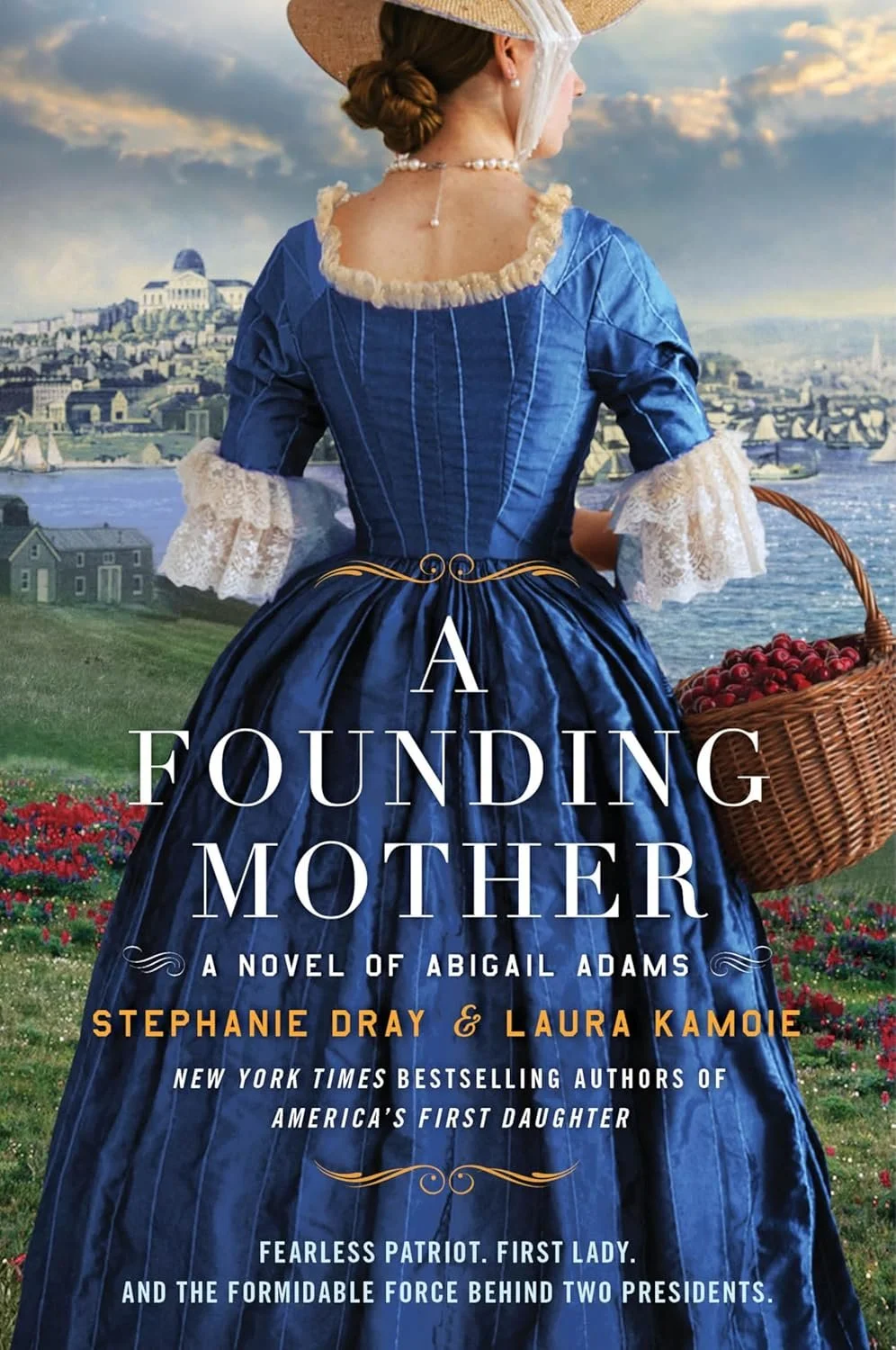
A Founding Mother, A Novel of Abigail Adams
Stephanie Dray & Laura Kamoie
In time for the 250th Anniversary of the birth of the United States comes a sweeping, intimate portrayal of Abigail Adams—wife of one president and mother to another—whose wit, willpower, and wisdom helped shape the fledgling republic. A stunning historical novel with modern-day implications from the New York Times bestselling authors of America’s First Daughter and My Dear Hamilton.
-
Cait (00:00)
What would Abigail Adams be drinking if she was here right now?
Jenna G Judith (00:02)
A tall glass of Sam Adams.
Cait (00:06)
That's
a good answer. I was going through like every cocktail in my head that I would be like, she's a martini girl, was having a drink with Abigail Adams, I'd want to be drinking a beer with Abigail Adams.
Jenna G Judith (00:16)
a hundred percent. And it wouldn't be dainty. It would be just bold and ⁓ I can see her like grabbing an IPA and being like, this one's for the fallen boys. just.
Cait (00:22)
you
You
cannot tell you, dear listeners, how thrilled we are about this episode.
we have Stephanie Dray and Laura Kamoie on Margs and Manuscripts today. They have written three of my absolute favorite historical fiction books. You've seen the covers. You've definitely read the books. They wrote My Dear Hamilton. Hello.
They wrote America's First Daughter. That was their first one and that was my first read and that's when I fell in love with them.
Today, May 5th, when this episode airs, is their release date for A Founding Mother, which is about Abigail freaking Adams, everyone.
Like I can't say enough wonderful things about these two women and their writing. make history digestible. They relate it to everything that you're experiencing today. Being a woman and finding kinship with women that came hundreds of years before you. I'm just so excited to talk to them. And so welcome Stephanie Dray and Laura Kamoi. Thank you for being here.
Jenna G Judith (01:33)
and take a drink every time Cait gets misty eyed.
Cait (01:36)
Take a drink every time I cry. Take a drink every time I talk about being from Boston.
Jenna G Judith (01:40)
I am a little disappointed you didn't like slip into your like, you know, your native tongue.
Cait (01:46)
yeah, when all the
where reenactments were happening in this, and this was gonna be my first question was like, which are the founding fathers of the sexiest? Because we have opinions here in Boston, and when we were watching the reenactments, we were like, I was like, my god, Paul Revere was like a celebrity, we were like, do you guys see Paul Revere? Holy shit, did you see him? Did you see him? Oh my god, he's fucking hot, I knew it, I knew he was gonna be hot, I knew he was gonna be hot. They got a good one, that's a good fucking Paul Revere right there.
Jenna G Judith (01:57)
really?
Okay, so Paul Revere is yours.
Cait (02:15)
is my founding father, Smash for Pass. Yeah, Smash, Paul Revere This book opened my eyes to some new ones, though. I really never considered Joseph Warren to be kind of hot, but Abigail says he's pretty attractive, so I'm gonna have to... I'm gonna have to agree with her,
And the Revolutionary War is something that I think is like, can be extremely romanticized.
and the women are very much forgotten. mean, like, if you're listening and you're like, I watched the John Adams series, John Adams goes to France for like five friggin' Years he is in France. And she is at home.
Jenna G Judith (02:45)
Yep.
raising kids.
Cait (02:49)
What was he doing?
Yes. And they're like, screw it. He got his story. Like, let's tell Abigail's story. And I am so here for it. I loved this book so much. I cannot recommend it enough. And any of their other books, like, I'm honestly sure that you've read some of them because they're just so lovely. And yeah, they highlight the ladies. You gotta love it.
Jenna G Judith (03:09)
And if you are feeling a little blue come the 250th anniversary of the signing of the Declaration of Independence, please get to the end of the episode and you will feel like there's light at the end of the tunnel. It's a little bit of hope and our guests do the best job telling us it's okay to be mad about the current state.
but also still be excited about where the country has come from and where it can go because there were people like Abigail Adams in the seat on the bus helping drive this sucker. So because who doesn't love a female in charge?
Cait (03:52)
thank you so much for both of you being here together and chatting with us. I'm like this makes me and Jenna feel so happy because Laura Stephanie was just telling us that she met you at a writers kind of in a writers group which is how Jenna and I met.
informed this partnership too. And so I'm like, for me and Jenna, this is really special because I feel like we're seeing two ladies that like really connected through this shared passion. And tell me more about that. I want to start there. You probably get this question all the time, but yeah.
Stephanie Dray (04:09)
⁓
Laura Kamoie (04:10)
that's awesome.
Jenna G Judith (04:23)
Like, let's just start from the beginning.
Stephanie Dray (04:26)
Laura and I were both members of the Maryland Romance Writers Organization, which at the time was a bit of a broader organization. It was primarily romance, but you could sort of be writing historical fiction and also be part of it. And at the time, Laura was a professor of American history at the U.S. Naval Academy. And I was writing about Cleopatra's daughter.
at the time. the thing that I remember, I don't actually remember like the moment I met Laura, but I remember that I liked her very much. And then she pitched to me a story that she would like me to read for a blurb quote. And then as she was describing it, I thought, no, this sounds terrible. And I should not read this because I really like her. And then we're not going to be friends anymore.
Laura Kamoie (05:09)
You
Stephanie Dray (05:16)
But I can't say no. So I opened it with such trepidation and then it was brilliant. And I was like, we're going to be besties.
Jenna G Judith (05:21)
you
Laura Kamoie (05:25)
She didn't tell me that story until much, much later. ⁓
Jenna G Judith (05:29)
You're like, I was terrified
you were an awful writer.
Laura Kamoie (05:33)
I'm
Stephanie Dray (05:34)
In fairness, the whole story is set in an elevator in the dark. So I, you know, I didn't have high hopes, but she's brilliant. So she pulled it off.
Cait (05:41)
you
Jenna G Judith (05:44)
And you're like, if you can pull that off, you can pull off anything.
Stephanie Dray (05:47)
That's right. That's right.
Cait (05:49)
Gosh,
I love the tea. I love getting the tea on here. How do you split this up as writers? How do you do this together and make it
Jenna G Judith (05:52)
Yes.
Like, yeah, yeah, like,
me, group projects, though I come from a design, like, like, I come from a design background. So you like have to play nice with everyone, but it's not everyone's like first choice.
Laura Kamoie (06:03)
Arguably the worst.
made it up as we went along basically because neither of us had ever written with someone else like this. And so when we came up with the idea for America's First Daughter at a writing conference, and we went from having a dinner table conversation to
to coming up with an idea based on the thought that we couldn't really think of much that had been written about Thomas Jefferson's daughters, to raising back to the hotel room and researching it for hours. And then in the middle of the night, that night, deciding, we're gonna write this book and we're gonna write it together. And...
So with a lot of excitement and a little bit of hubris, we sort of dove into this. our process has evolved with each book. With the first one, we outlined and brainstormed together. And literally, we were so sort of together in the process that we would get on a Google video chat. And I would be working on one chapter and Steph would be working on the next chapter. And we would be researching live and swapping.
source material that we thought would be useful for the other person and then we would immediately trade the chapters and revise freely. And 95 % of the time we just, or more even, we just accepted all of the other person's changes. And that changed over time based on what else might have been going on in our solo writing careers or
based on what was going on with the book. But basically we took a lot of the ego out of the process and tried to remember that it wasn't Steph's words or Laura's words. It was the character that we needed to have one unified voice. And so we really found ourselves, you know, handling pretty much every page of the manuscript in order to get it there.
Jenna G Judith (08:05)
So it was just a lot of that mutual trust and respect and saying, I believe that you are on the same page as me and then you just kind of took off and how many are you at now together that you've written?
Stephanie Dray (08:08)
yeah. Yes.
I think we say it's three and a half because we've written two founding mothers books, America's First Daughter and My Dear Hamilton. But we also collaborated on a little known book called Ribbons of Scarlet about the women of the French Revolution. And there were other authors involved in that. So that's why I counted as half. I think we could count it as all, you know, a whole book. So we'll call it three. So this will be our fourth.
Jenna G Judith (08:45)
So are you working on any others too?
Stephanie Dray (08:48)
We are, but we can't tell you what it is yet because because the publisher doesn't know yet. So if if we told you first. Yes.
Jenna G Judith (08:51)
I'm dying.
Cait (08:58)
Well, you're coming back on here so we can get the scoop on that one. That's happening. We want
Jenna G Judith (09:01)
Yes. Yes.
Laura Kamoie (09:02)
Okay, okay.
Cait (09:04)
the scoop. But how do you, my question too is when you are deciding on these topics together and who you're gonna cover, is there, is there,
a thought about working with your traditionally published authors. Is there kind of like, what's going to work best in the market, or what are we the most interested in? do you have ideas that you would have wanted to pursue, but maybe they weren't the best at the time for the market, or whatever it is now that you are connected to?
Stephanie Dray (09:33)
Yeah, I mean, and I know Laura will agree with me. We were actually quite reluctant to take on even Abigail for a long time. We've been asked over and over again to do Abigail Adams. Everyone wanted a book on Abigail Adams. And Laura and I are both fans of the HBO special John Adams. And so we we we. Yes, it's totally obsession worthy. And Laura and I, you know, we would talk all the time about the fact like, how are we going to outdo Laura Linney?
Jenna G Judith (09:51)
We're obsessed.
Laura Kamoie (09:55)
Right.
Stephanie Dray (10:02)
Like, there's no way she's an American treasure. We cannot compete. And then eventually we found a way in that was unique because the special doesn't really cover Abigail's life and her motivations and her contributions that way, because it's really about John. But once we wrapped our heads around what we were going to write about, what we were going to focus on, then we thought, OK, this is.
⁓ commercial enough and it's something that we're excited about. Laura, did you have anything else that you wanted to add to that?
Laura Kamoie (10:32)
Yeah, I would just say that the other consideration that has gone into each of these selections is that we're writing women who live in the same time period, sometimes in the same places, who are in the same social and political circles, and all of whose lives overlap. In fact, I think they all, or almost,
Stephanie Dray (10:55)
Yeah.
Laura Kamoie (10:57)
all play cameos in each other's books. So the other consideration was who can we pick that gives us a substantially new story to tell about the revolutionary era? So we don't want people who all had very similar experiences because then we don't have something new to say. We don't have a new story to tell. So, you know, we went from
Patsy whose life is dedicated to her father who spends her formative years in Paris, but then marries Young and spends the rest of her life on a plantation, mostly her father's. And she played very little role in his public political career.
compared to the others, especially. And then we have Eliza, who's not only from the Northern frontier, but comes from a place that is quite culturally diverse. Even the Dutch background is more liberal than the English colonial background. She's the daughter of a general. So when the war breaks out, his cause is her cause. That's how she's been brought up. And she very soon after falls in love with a soldier and the military life.
then becomes her life. And then when he goes on to politics, his political life becomes her life. And they are very much partners and politics is happening in their parlor every night. And so it's very hard to separate Eliza's personal life from his political life. And then of course, he dies and she famously lives another 50 years. And so that's an experience that's
Jenna G Judith (12:24)
True.
Laura Kamoie (12:31)
that's very different. In fact, she's the one of, if not the longest living member of the founding generation, because she does not die until 1854. And she lives to meet and know Abraham Lincoln. I mean, it's crazy. She knows most of the first 16 presidents. And then with Abigail,
Now we have the oldest of them. So she's an adult when the Revolutionary War breaks out. They live in Massachusetts and Boston, which is the center really of the resistance to all of Great Britain's unpopular policies and therefore becomes the target of Britain's repressive punishments for that resistance.
because of her husband's nation building activities, she ends up being basically a single mother in the middle of a war for really a cumulative total of about a dozen years. And so each of those stories allows us to look at the revolution from a different perspective and a different geography where different battles and issues are playing out. And so that's always been a consideration for us too is, you know, we want to
have a unique story to tell each time.
Jenna G Judith (13:48)
Mm-hmm. Wow.
Cait (13:50)
Something I
love about all of your books, I especially love it in the Abigail Adams book because she is a person that we know so well and we truly adore. You do such a good job at reading between the lines of history and that's the best way I can say it is taking these thousands of letters and being like, well, you guys, had how many children?
and going into like even intimacy of like the lives of Abigail and John and I'm just like yes
Stephanie Dray (14:14)
You
Jenna G Judith (14:19)
Yes!
Stephanie Dray (14:23)
You
Cait (14:23)
Even in, I was dying when she was talking about even just like how attractive like George Washington was or how like Joseph Warren was. I mean, cause George Washington's not on my top five, like hottest founding fathers. Paul Revere.
Stephanie Dray (14:30)
Hey
Laura Kamoie (14:39)
my God,
no, have you seen the like AI pictures of the founding fathers with like their shirtless and stuff? ⁓ You're just a looker, I'm telling you. He's tall.
Jenna G Judith (14:48)
my god.
Stephanie Dray (14:48)
No! No!
Jenna G Judith (14:54)
He
was like a six foot ginger with messed up teeth and lead poisoning.
Laura Kamoie (14:57)
What? Jenna has it. Jenna's got it. She knows the
Stephanie Dray (15:00)
You know what, though?
Laura Kamoie (15:01)
tea on George Washington.
Stephanie Dray (15:01)
He had like they all said he had like a soldierly build. So it means he was tall and muscly and looks great on a horse, dances. Right. He doesn't need to. Yeah.
Jenna G Judith (15:06)
What does that mean?
Laura Kamoie (15:08)
He looked good on a horse. I mean...
Jenna G Judith (15:12)
Just don't open your mouth.
Laura Kamoie (15:14)
He wore the heck out of that uniform!
Cait (15:17)
You have a favorite founding father. I can tell when you're writing you're like definitely like I'm picturing Sam Adams with the hot one here. There has to be.
Stephanie Dray (15:26)
⁓ I actually think this is kind of funny, but our favorite, I think, changes every book because we've now written. we write the Jefferson book in which Alexander Hamilton is, you know, the devil incarnate. Then we write the Hamilton book in which Thomas Jefferson is terrible. Like he is the arch villain. And then we get to John Adams book and he hates them both. And
Jenna G Judith (15:42)
you
HA!
Stephanie Dray (15:54)
And so we see them from all these different angles. And, you know, there's a reason if any of you have seen the Hamilton musical, they really gloss over the Adams administration. There's a reason for that, because this is not Alexander Hamilton's finest hour at all. When you start delving into it, you're like, ⁓ no, I can see why the Adamses think he is the literal devil. And Abigail even said that she saw the devil in his eyes. So.
Laura Kamoie (16:10)
What?
Stephanie Dray (16:22)
I don't know that I have a favorite because it every like right now I'm I'm thinking I'm very charmed by John.
Jenna G Judith (16:29)
Do it.
Laura Kamoie (16:30)
Well, and I think we've talked many times about the fact that we wrote these books in the right order, because if we had left Jefferson after Hamilton and Adams, I don't know that we could have really like sank into Patsy's idolization of her father in the same way after, you know, seeing him.
Stephanie Dray (16:35)
Mm-hmm.
Laura Kamoie (16:53)
through the Adamses and the Hamiltons eyes. And so it's funny because sometimes in reviews people be like, they just hate Thomas Jefferson. And we chuckle because we're like, first of all, no, it's not us. It's not us. We wrote a whole book where his daughter does nothing but protect and defend and laud him. It's it's the Hamiltons. It's not us.
Jenna G Judith (17:14)
Hmm.
Yeah, it's, it's, well, I think that's a testament to being able to evoke your character's feelings and not putting your own, like asserting your own thoughts on to them. Because if they got done with that book and they're like, wow, they hate Jefferson. But like, why? Like, right. You're like, we did our job. Thank you very much.
Stephanie Dray (17:35)
Why? Right.
Cait (17:39)
Thank
Laura Kamoie (17:41)
See, it's turning out to be something of like a soap opera where you really have to read all of them to get the real insight because, you know, they're all lying about each other and they're all scheming behind each other's backs and having affairs and telling lies and getting involved in, it's like days of our revolution or something.
Jenna G Judith (17:45)
Yes.
founding lives.
Stephanie Dray (18:05)
I
Cait (18:06)
It is! You and
you do not glass over! No! ⁓
Laura Kamoie (18:07)
Dangerous revolutionary lives. There we go.
Stephanie Dray (18:10)
Love it, love it, I will watch.
Laura Kamoie (18:13)
I would totally watch that. Yes.
Jenna G Judith (18:13)
HBO, this is your calling.
Cait (18:15)
I love you.
You don't gloss over the fact that John Adams does have a problem with vanity and you know and he was a man of his time and I love that you you really dig into that and her reaction to that. It's in and yeah I the Laura Liddy stuff I don't know I I thought I I.
John Adams is a comfort watch to me. It's Gilmore Girls' John Adams all day. And I pictured both, maybe I just pictured Laura Linney as Abigail Adams in her own movie. And it was so enjoyable. I loved this book so much. My other question too is like how, I mean I would be totally convinced if you said that one person does the research and one person does the writing because the writing is so seamless. It's just, it feels like one voice.
across all the pages. So my question is how do you take those letters and all of that research and translate it into finding their voice as writers and keeping it consistent?
Stephanie Dray (19:07)
Well, it's really a mission of ours that we try to let the characters speak in their own voices as much as possible. And it worked out especially well with Abigail because she left so many more letters than the other heroines that we've written about before. She's a very distinctive voice. She's tart and she's funny and occasionally super gossipy. And, you know, she's a real flesh and blood human being with her own
Jenna G Judith (19:25)
Yes!
Stephanie Dray (19:32)
flaws, but I just adore her, so I'm willing to overlook. But whenever we would find a place where we could actually put something that she said in her letters into her dialogue, then we would do that or even into her internal monologue. Now, the problem with doing this directly is that the writing of the 18th century can be a bit stilted.
And they really don't pay any attention to punctuation or spelling. You know, it's pretty random. So we have to sort of edit this and use what Laura and I affectionately call old timey language. We want to preserve that it's not modern, but also modernize it enough that the modern reader can understand what they're saying and make sure to
normalize all the punctuation in the spelling. ⁓ But I do remember the first time we had to edit something that Thomas Jefferson wrote, we were having fits because we were like, what hubris is this? We're going to we're going to edit the words of Thomas Jefferson. Like, who are we? Now we're you know, we're comfortable doing this because it's really our job to help make these figures more accessible to readers.
Laura Kamoie (20:37)
Okay.
Jenna G Judith (20:48)
When you were nailing down her voice, was that out of all of the ones that you've done, you said she had the most letters. How did you get access to all those letters? yeah, archives.
Cait (21:00)
Are they public? What's the T on the hat on the roof part?
Laura Kamoie (21:03)
That's the easiest
part, actually. The National Archives has digitized and transcribed
probably at this point, hundreds of thousands of letters of the founding fathers and mothers, the founding generation. They're not all there, but many are and they're adding new ones all the time. And the wonderful thing about them being transcribed is that makes them searchable. So you can literally search Abigail Adams babies and it'll come up with all the letters either.
Jenna G Judith (21:28)
Yes.
Laura Kamoie (21:36)
to, from, or about Abigail Adams that mentioned babies. So if you're working on a certain kind of thing, you can search that way. You can also just read them in chronological order. And ⁓ it's an amazing and free resource that is available for everyone. And we've made significant use of it in all of our books.
Jenna G Judith (21:56)
Have you ever seen them in person? Is that a thing you can even do?
Stephanie Dray (22:01)
You can, we have seen some letters in person. I don't think we did not have to do serious archival research this time for Abigail because her letters are so famous and they've been translated for very long time. But when we were working on the Eliza Hamilton book, many of Eliza's letters had not been digitized yet. And so we went to the New York Historical Society.
I want to say we went to a library, Laura, where it might have been closed for renovations or something, but I'll.
Laura Kamoie (22:31)
We went
to the public library and they had taken the Schuyler family letters off site to photograph them for digitization. And we were crushed. I mean, happy that that was happening, but crushed because it meant we couldn't see them. So then we went to the Schuyler house in Albany, which is a historic house museum where they had some of the letters there as well. So we also looked into ⁓ their collections.
Stephanie Dray (22:57)
Yeah, so sometimes we do get to touch them and see them. And generally I freak out and Laura's the only one with the presence of mind to take a photo of the letters and the signatures. But it's always an experience.
Jenna G Judith (23:07)
You
Cait (23:11)
What's like the coolest in all of the books that you've written? Probably what's the coolest bit of research you've been able to do or thing that you've been able to see?
Jenna G Judith (23:11)
my goodness.
Stephanie Dray (23:20)
well, usually these are madcap adventures on our part. I can think of two. One of them was when we went to Monticello for America's first daughter. I'll let you tell the others the other time that we almost got arrested. This time we were at Monticello and we had not told anyone who we were, what we were doing. And so we get there and we are just, you know.
Jenna G Judith (23:32)
Cough
Stephanie Dray (23:43)
gobsmacked by everything. We're so enthusiastic and we're in, I think, the Madison room and the docent says something like, and this shaving kit belonged to William Short. Of course, no one else knows who William Short is, but he's a major character that we're writing about. so Laura and I both like shriek, William Short! my God! And we, you know, we like we're shoving people out of the way. We want to touch this stuff.
Laura Kamoie (24:03)
you
Excuse me.
Stephanie Dray (24:11)
And they are now concerned. so they have like a security guard trailing us through the house to make sure that we don't touch anything. But we also got to go upstairs into Patsy Jefferson's bedroom when it just started to be open to the public. And for us, that was a really meaningful experience because we got to understand in a way that we could never have understood if we weren't in the space.
That Patsy's bedroom is directly over Thomas Jefferson's. Now, if you see his room and there's a million beautiful pictures of it online, it overlooks a flower garden. It's all beautiful. It's his idealized world of Monticello. Patsy is above him in her room overlooks Mulberry Row, which is where the enslaved people live on the plantation. And we think it's why she always had a much more realistic idea of what was happening.
both in the country and especially on the plantation and what their prosperity was built on. And so we tried to really work that in to the manuscript. And Laura, you can tell them about your misadventure with the window at Tuckahoe.
Jenna G Judith (25:19)
Did you break an energy?
Laura Kamoie (25:20)
I have so many first-reading
Cait (25:21)
you
Laura Kamoie (25:21)
stories, but yes. So we went to Tuckahoe Plantation, which is outside of Richmond, Virginia, which is the ancestral home of the Randolph family, which Patsy married into Thomas Mann Randolph. And there is a tradition in the family. There's a date that's carved into a window in a parlor.
And the tradition that they tell at the house when you go for a tour, which is what we were doing, is that the daughters, in order to test if their engagement rings were actually diamond, would write into the glass. And first of all, this doesn't make sense on a lot of levels, but
It especially doesn't make sense when you realize that the date is...
Jenna G Judith (26:07)
you
Laura Kamoie (26:11)
March 16th.
Stephanie Dray (26:13)
I know what date it was, but you're pulling that out of your butt and I appreciate that. Mind you, there's only one date carved on the window. Okay, all right.
Cait (26:16)
You
Laura Kamoie (26:20)
I think 1770, but I could be wrong.
Whatever the date is, it is the date that Thomas Mann Randolph, his mother died.
And very quickly thereafter, the father married this 18-year-old twit who very quickly set about redecorating to get rid of everything that the mother had, the other woman had done. So that's not random. Somebody specifically carved
the mother's death date into the glass, this permanent reminder that she could never be gotten rid of. So you couldn't get super close to it. we go outside and we're basically like, we want to take a picture of this date. So we're basically like sort of scaling the size.
Jenna G Judith (26:56)
with a diamond.
Laura Kamoie (27:12)
Decided to building to get our camera close enough to take a meaningful picture. And we sort of did. I have the pictures that we took from that day. You can see it pretty clearly.
Stephanie Dray (27:20)
You did. And I distracted the guard. So it was a successful caper where
we got the picture and we can prove. mean, there's no way that a girl who's getting engaged randomly carves her mother's death date into the window. So that was a that was that was a fun misadventure. Yeah.
Laura Kamoie (27:36)
No. So somebody was
making it known to this 18 year old girl that you may be the new mistress, but you're not the mistress of Tuckahoe. The other funny story that came from that same trip, and we had so many actually, is that when we were at Monticello, we went down to the family cemetery, which is back behind the...
Jenna G Judith (27:50)
Someone?
Laura Kamoie (28:01)
mansion and we're standing at the gate. Thomas Jefferson's obelisk is sort of right in front of you behind the fence and there's a bronze plaque that draws all the burials to tell you who is buried where. And I'm looking at this and all of a sudden I see something and I cannot talk and I'm grabbing Stephanie and I'm like pulling her and I'm freaking out.
And of course there's other people around who are trying to enjoy the cemetery as well. I'm starting to make just a little bit of a scene because what I saw, right, ⁓ is that if Thomas Jefferson's obelisk was here, Patsy was buried here and her husband was buried on the other side of Jefferson. So.
Stephanie Dray (28:34)
again.
Cait (28:34)
you
Jenna G Judith (28:36)
It's fine.
Laura Kamoie (28:51)
Literally, Jefferson was buried in between them. And since the husband died first and Patsy died second, that means that she probably had some say in that. And after we had just drafted a book about how Thomas Jefferson was always in the middle of their marriage, to see it literally in the ground.
Jenna G Judith (29:01)
locate it.
Laura Kamoie (29:16)
was like even just talking about it right now, I'm getting chills on my arms because there are these moments when you write historical fiction sometimes where later you fall over the proof that what you theorized and interpreted was actually true. And it was probably the most fantastic example of that from any of the books.
Jenna G Judith (29:39)
I'm like stunned.
Laura Kamoie (29:39)
Crazy.
Cait (29:40)
I know, that just
made me so emotional. know why. I love that.
Jenna G Judith (29:43)
I'm like, Cait, are you crying? Are you crying, Cait?
Cait (29:48)
Yeah, I just... Let's just call it.
Jenna G Judith (29:50)
What?
Call a spade a spade, you got misty eyed, it's fine.
Cait (29:55)
⁓ I know.
I love it. ⁓
Laura Kamoie (29:57)
So sometimes
we can be kind of menaces when we go places and we find stuff that's important to the books and we just can't hold back our excitement.
Stephanie Dray (30:08)
But Laura, this is how we know that Cait and Jenna are our people, because she got verklemped about a historical thing, and that's us. We are lunatics. You know, we walk into the Library of Congress and cry. You know, this is who we are, and so you're our people.
Laura Kamoie (30:12)
Yeah.
Jenna G Judith (30:22)
my god.
Cait (30:24)
Yep. I did a post recently for, I don't know why, but I'd never been to Orchard House before. I grew up here. My dad, on Bunker Hill Day, we would go and sit where General Joseph Warren was shot and have lunch, like, on the thing. But I'd never been to Orchard House. And I walked into Orchard House and, like, walked into her room and lost, just started going, like, by myself on this tour. So, like, I totally, I get it. And I think being from Massachusetts, it's so...
Jenna G Judith (30:25)
I just... Yeah.
Stephanie Dray (30:45)
⁓
Cait (30:52)
ingrained in us like that history is just literally a part of growing up. It's in our blood. is very present everywhere you go. So when you guys come to Boston, we'll do your thing at Old North Church and then we'll go grab a drink at Green Dragon and we'll hang out. Yes, of course.
Stephanie Dray (31:09)
⁓ at the green dragon?
Laura Kamoie (31:10)
Also
Jenna G Judith (31:12)
⁓
Cait worked there.
Laura Kamoie (31:15)
Hahaha!
Cait (31:17)
bartender
with the green dragon when she walked into the green dragon let me tell you I immediately started slapping my husband and I was like what I would give to have a drink with Abigail Adams at the green dragon I mean have you been into the green dragon ⁓
Jenna G Judith (31:28)
Yes.
Stephanie Dray (31:30)
No, we're
Laura Kamoie (31:31)
I do
Jenna G Judith (31:31)
HA!
Stephanie Dray (31:31)
so
Laura Kamoie (31:31)
know.
Stephanie Dray (31:31)
excited! This is gonna be great! We might cry! Yes. Okay.
Cait (31:32)
my god, this is happening. It's right down the street
from Old North Church. Absolutely. It is, I mean, unchanged. You will love it. You will absolutely love it. ⁓ Yeah, no, Old North Church, it's like literally five minute walk.
Laura Kamoie (31:38)
We will raise a glass to Abigail.
That's so awesome.
Jenna G Judith (31:49)
And here, like, we just...
And so I'm going out to Boston for Cait's book launch at the end of May. And my husband's coming with and he's huge, huge history buff. He's like, what museums can we go to? I want to go see. I want to go see old shit. like, my God. I'm like, like we're going for Cait's book launch. Priority number one. And he's like, I want to go see. thanks.
my God.
Cait (32:15)
I just wanted to give
us the opportunity to, I know, and this is why I have to stop at 45 because we just got so excited to talk to people. We could go all day. ⁓ But please like...
Jenna G Judith (32:19)
Can we just do this all day? Like what? Who needs a job?
Laura Kamoie (32:22)
you
Jenna G Judith (32:27)
Mm-hmm.
Cait (32:29)
plug the book, anything that you want that's like officially plugging the book that we can add in or anything that you wanted to touch on about the book that you didn't get to talk about. Anything like that, yeah.
Stephanie Dray (32:43)
Alright, I would say here it is, a founding mother.
Jenna G Judith (32:46)
I want my
Stephanie Dray (32:48)
book
for everyone who knows how important it is to remember the ladies.
Jenna G Judith (32:54)
It is.
Laura Kamoie (32:55)
say a couple of things about Founding Mother that I would love for readers to know. One, that we are going on an absolutely fantastic book tour starting on May 2nd. Most of the stops we are gonna be together. A few of them we are going to divide and conquer.
all over the east coast but into the midwest and even out to California as well and you can get more information about that at drakemoy.com forward slash events.
Cait (33:23)
This is so exciting. and I can talk about when you guys said remember the mothers in that chapter in that opening chapter and you said what about the mothers? Died. I died. I died. What an opening. It was so good. Yeah
Jenna G Judith (33:25)
So exciting.
I
love it. will just like my little like moment of reading that was when her first her daughter died. And like one of those opening chapters. And I was just like, I had never experienced I have never experienced anything like that. But so many people have like in our like who is alive today.
Stephanie Dray (33:39)
So.
Jenna G Judith (34:00)
And just thinking of how that is a transcending experience that women have faced for centuries, thousands of years of like going through that with your child and that never... I granted wanted to kind of slap John when he told her like you gotta like buck up, but also like she was always like this pillar.
for everyone around her and it was so beautifully written that scene where it wasn't it wasn't full of unnecessary prose. It wasn't full of descriptors that needed to convey her grief. It was just a if you are a woman reading this, this is what happened. You know exactly what all of these feelings are and it was absolutely gorgeous and I'm pretty sure I cried. it was was gorgeous.
Laura Kamoie (34:47)
Absolutely.
Jenna G Judith (34:50)
haven't finished it yet and I'm like dying to because jobs, kids, podcast things. But if you get your hands on this, you're gonna pause on it, just you're not gonna be able to put it down. it's, it just, it's like trickling in the back of my head. It's like, go read it, go read it right now.
Cait (35:06)
Yeah, you won't be able to put it
down. And it is such a great reminder, too, that, and you start off with, it starts off in 1814, which was so brilliant, because it's just also a reminder that at some point, every generation had the feeling that this country was gonna end. I mean, the actual...
Stephanie Dray (35:23)
Yes.
Jenna G Judith (35:24)
⁓ shit.
Cait (35:25)
You know, the White House is on fire. Imagine if that happened, I mean, and we talk about, I think our generation specifically, like we talk in these kind of, like this is it, like it's over, like look at all the things we've been through as millennials, like 9-11 and stuff, and then you open that chapter and you're like, yeah. We are not, like this is, times have been pretty bad.
Jenna G Judith (35:48)
Yeah,
this is not unique.
Cait (35:50)
This is not
unique, so thank you for that reminder.
Laura Kamoie (35:52)
Yeah, and even
a step beyond that too, is that like, they didn't have the choice to give up or wash their hands of it or say it's somebody else's problem, right? They knew that the union surviving took active participation and that remains true.
You know, they were regular people. They had to sacrifice a lot to keep it together. And that's a lesson that remains relevant.
Stephanie Dray (36:24)
Yeah. And I guess I want to add that when we were writing this, we were aware that it was going to come out in time for the 250th anniversary of the Declaration of Independence. And we were also keenly aware that this was a time, a particular anniversary where Americans are going to be arguing a lot about the legacy of the country and where we're going now and what the mission of the nation remains, because we are the only nation on Earth that began with a mission.
And so we thought and we believe this strongly that Abigail's voice is the most modern and resonant to speak to this moment that we're facing. And so I know that people are going to have complicated feelings about the anniversary, but this is the book that you read to help you sort those feelings out.
Jenna G Judith (37:12)
I like got chills just for a second. Like, my gosh. Can I just, can I just like live in Boston for the month of May and follow you around and I can work remote and we're just gonna, I'll just be your fangirl. I'll be like cheering in the background and everything.
Cait (37:14)
I thought it was all around. Love it.
Laura Kamoie (37:17)
Yes.
Stephanie Dray (37:23)
You
Laura Kamoie (37:25)
Yes!
Cait (37:31)
Yeah.
Thank you so much Stephanie and Laura. This was as fun as I knew it was going to be talking to the two of you. you're besties of the pod now. Please, in the future, let us know any way we can post support, be there for you in any possible way that we can promote whatever it is that you're doing, not just this project, but any project.
Stephanie Dray (37:53)
Well, thank
you very much and I'd like to extend a similar offer to you. Since you have a book forthcoming, please do send me information. I have a newsletter and I think my readers might be interested.
Cait (38:02)
Absolutely, yeah, and I'm serious about the green dragon. Let's
Laura Kamoie (38:03)
Absolutely.
Stephanie Dray (38:07)
We're taking you up on that. Yes.
Jenna G Judith (38:07)
Go have a Sam Adams in the green dragon.
Laura Kamoie (38:09)
Yes, for sure.
